
The Book
Drawing on ancient Indian wisdom — the paradox of owning the world only by ceasing to cling to it.

The Wanderer Who Owns the World
Based on Ancient Indian Philosophy for Meaning and Truth — A Self-help Guide to Inner Freedom
This philosophical self-help work explores human existence through the lens of ancient Indian wisdom. Sri Yogi presents the paradoxical notion that true freedom emerges through non-attachment rather than possession — the realization that one owns the world only when one ceases to cling to it.
Drawing on spiritual philosophy and lived insight, the book guides readers toward deeper self-understanding and purposeful living. It is written for seekers of meaning, stillness and truth — for anyone who has sensed a quiet inner knowing but lacked the words to express it.
A Journey Through the Mysteries of Life
The Wanderer Who Owns the World is a layered, soul-driven journey through the stages and mysteries of human life. Drawing from ancient Indian philosophy, personal insight, and elemental experience, the book moves through nine sections — each peeling back a different layer of what it means to live, to feel, to seek, and ultimately, to remember.
It begins with conception — not just biological, but cosmic. From there it dives into the quiet pulse of reality itself, where nature, time, and the divine hum just beneath ordinary things. Passion and desire arrive next, not as problems to fix, but as truths to feel. Purpose follows — not in grand declarations, but in the quiet rituals of caregiving, food, water, and breath.
Stories come next — of saints, seekers, and the everyday sacred — carrying teachings not through sermons, but through feeling. The final chapters turn inward: to subtle practices, moments of truth, and glimpses of freedom. Yoga is no longer posture — it becomes presence. Samadhi is not a goal but a homecoming.
This is not a book about owning anything in the usual sense. It is about the kind of ownership that comes from letting go — a return to what you never lost.
The Nine Sections
Each of the book’s nine sections peels back a different layer of human experience — from conception to liberation.
- Explores existence from conception to death through metaphysics, biology, and conscious awareness as a path to self-realisation.
- A poetic meditation on the underlying cosmic order (Ṛta), the play of Prakṛti, and the veiled yet intimate nature of Ātman and Brahman.
- Embodies intense physical and emotional longing, invoking the Aṣṭarāgās and questioning societal constructs through a lens of dynamic rebirth.
- Illuminates the spiritual dimension in everyday acts — caregiving, rituals, and bodily processes — through Apāna Vāyu, Dharma, and Śaucha.
- Presents Vāstu Śāstra and Jyotiṣa as frameworks for harmonising with cosmic and ecological rhythms.
- Uses allegorical storytelling to highlight virtues like humility and compassion, framing life’s trials as opportunities for transcendence.
- Describes devotion as visceral and lived, where lineage and guru are internalised through ancestral memory and subtle presence.
- Portrays temples, rituals, and symbols as living structures that activate inner transformation — with Nāgas, Siddhis, and granthis as metaphysical mechanics.
- Depicts liberation not as an external goal but as an inner unveiling, where the self sheds its layers and becomes a quiet channel for presence and light.
For the Seeker in You
This book is for those who are searching — for meaning, for stillness, for something true. Not just spiritual seekers, but anyone who has ever felt a quiet knowing they couldn’t put into words.
This book may speak to you if:
- You practise yoga, sit in meditation, or walk with spiritual questions close to your heart.
- You are drawn to sacred texts, poetry, and wisdom felt in the body as much as understood in the mind.
- Your spiritual insight has come not from books alone but through lived experience.
- You are recovering from rigid beliefs and seeking a more open, honest, intuitive path.
It does not tell you what to believe — it reminds you that you already know.
Readers who love Braiding Sweetgrass by Robin Wall Kimmerer · The Prophet by Kahlil Gibran · Women Who Run with the Wolves by Clarissa Pinkola Estés · Pilgrim at Tinker Creek by Annie Dillard may feel at home in its pages.
Reader Reviews
India has a rich tradition of making sense of the universe through an inward exploratory journey. Sri Yogishwara Swami has narrated the interaction of the universe with the human body — from birth to death — in a language and understanding replete with today’s science and technology terms. The book gives an amazing exposure to the seeker.
“The Wanderer Who Owns the World” is in itself a wonder production of an exceptional and unique saga. This volume, couched with an awesome employment of language, is a blessed boon to those trapped in the meshes of Samsara — and to the seekers for whom Infinite Bliss is the ultimate goal.
A Rare Literary & Spiritual Achievement
Not merely a book but a profound spiritual journey across 9 sections and 66 chapters. It does not merely inform the intellect; it inspires transformation — a companion for life’s journey, a mirror for self-reflection, and a timeless guide for spiritual awakening. “To own the world, carry nothing. To find yourself, seek sincerely.”
Medical Science Bridged with Metaphysics
The most wonderful book ever to be published. It leads you into a trance of awakening, thrills you with the amazing depth of knowledge hidden in its pages and literally transforms your life! This book is unique inasmuch it has bridged medical science with metaphysics and spirituality in its purest form without any religious implications, so that every human being on earth can benefit individually and collectively through it.
Ground-Breaking in the Current Spiritual World
Published by Penguin Ananda, the book touted as one of the ground breaking one in the current spiritual world as the author, with as vibrant background as an architect and aviation expert, delved into the intricacies of the essence of the spirituality.
The Walk Within the Fire
by Vikas P Hegde
About the sublime saga of the living legend — the extraordinary life of Sri Yogi, from a man of the world to the emergence of an Avadhoota.
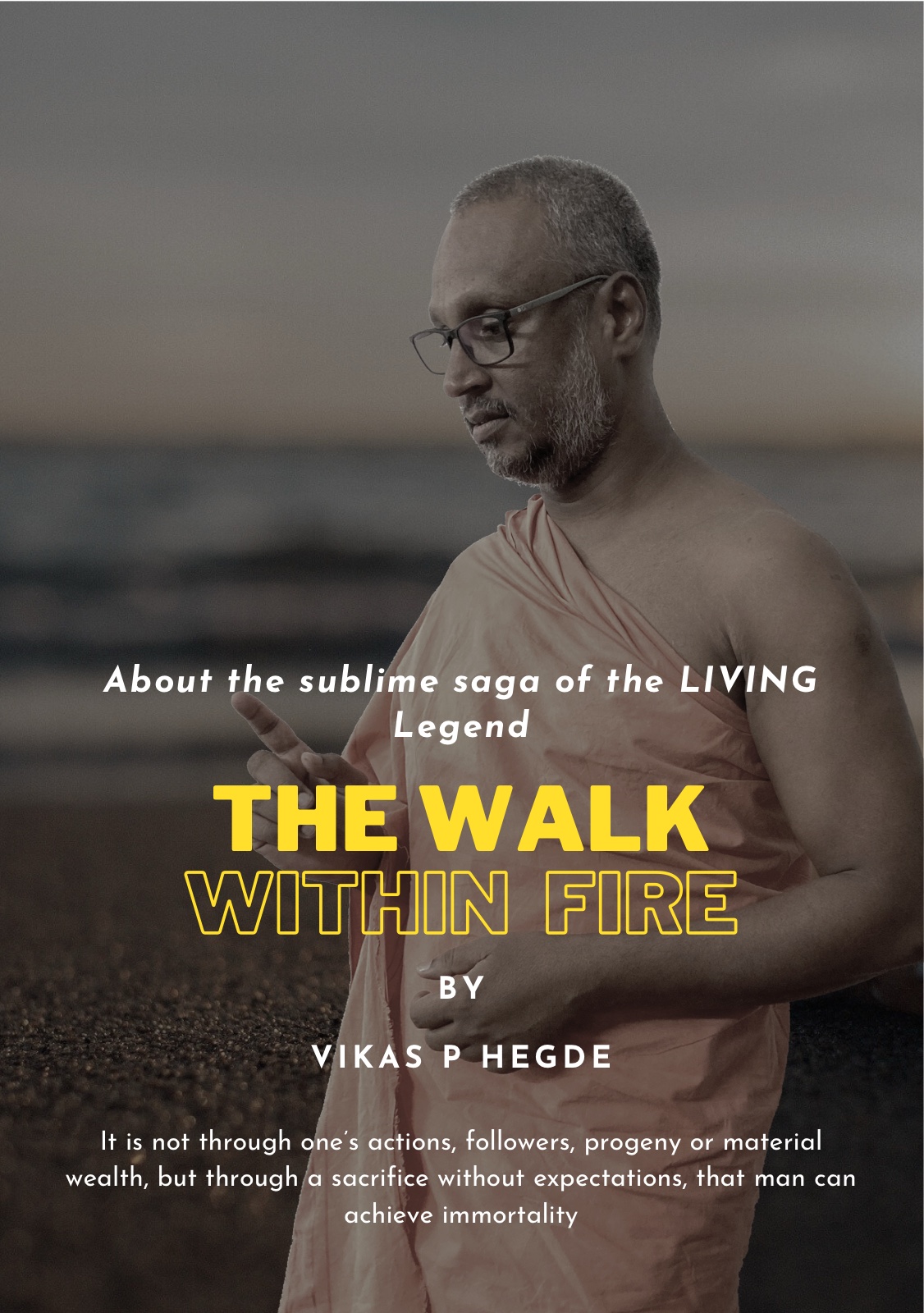
It is not through one’s actions, followers, progeny or material wealth, but through a sacrifice without expectations, that man can achieve immortality.
The Walk Within the Fire is more than a biography of Sri Yogi — it is an inspiring account of a life dedicated to truth, discipline, and spiritual awakening. The book beautifully portrays how challenges and hardships can become the very path to inner transformation when faced with courage, faith, and unwavering determination.
Rather than simply narrating the life of Sri Yogi, it offers timeless lessons on self-discovery, resilience, humility, and the pursuit of higher consciousness. Every page encourages readers to reflect on their own journey and reminds us that the greatest transformation begins within.
At its heart, the book is about the essential wisdom of searching for the Self and experiencing the ultimate reality of human life. It depicts the extraordinary journey of a saint — from birth to the emergence of an Avadhoota — whose sole purpose is to guide people from a painful materialistic life to a blissful spiritual existence, even in this era of Kaliyuga.
The journey chronicles the pivotal moments in the life of a simple man of the world who was destined to lead an ascetic life — a transition from luxury to sacrifice and selflessness. It draws on vital teachings from Sri Guruji that help readers realise their true potential, offering direction on the path to enlightenment even for those who have faced innumerable failures in their pursuit of the spiritual.
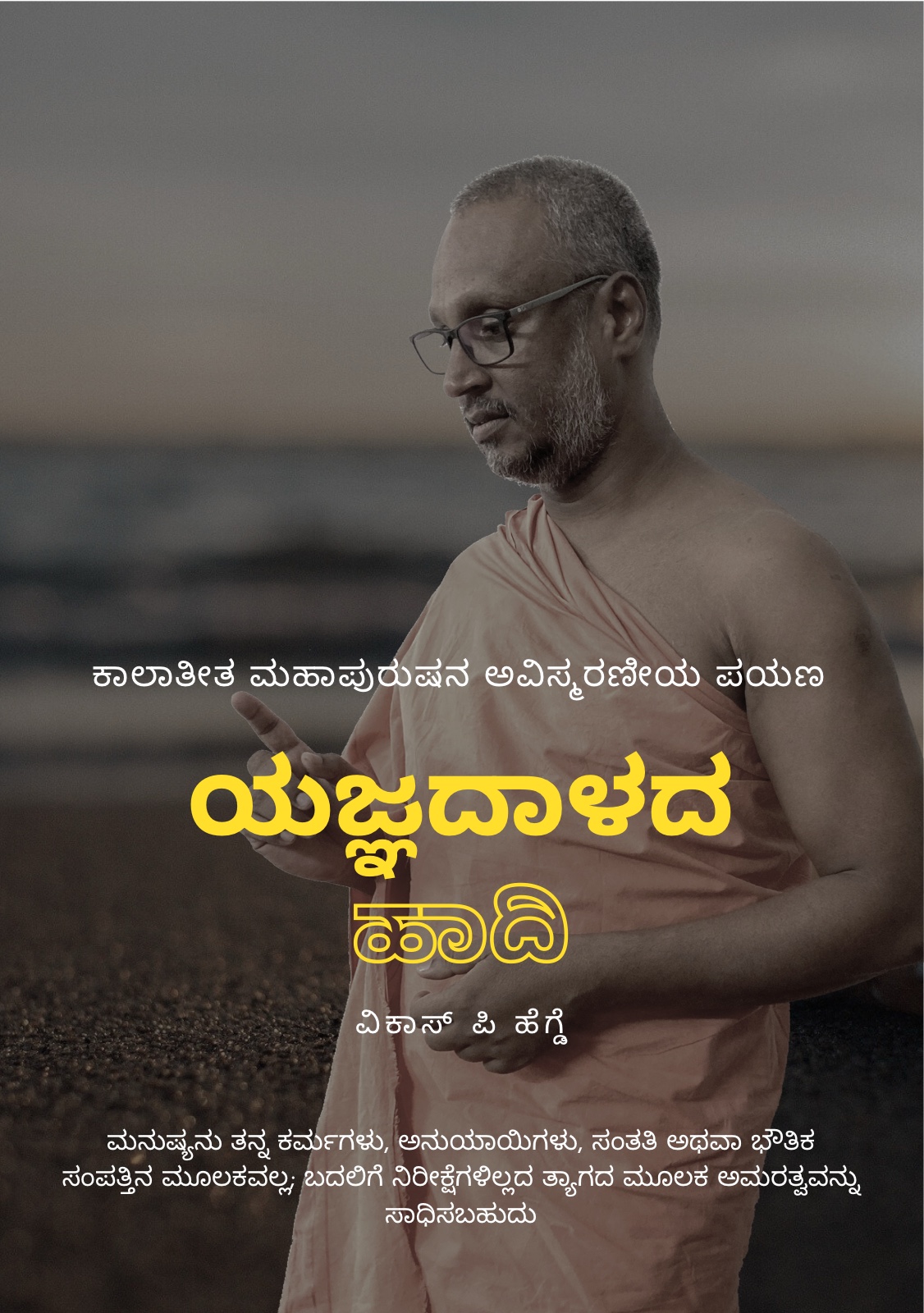
ಈ ಪುಸ್ತಕವು ಮಾನವ ಜೀವನದಲ್ಲಿ ಆತ್ಮವನ್ನು ಅರಸಿ, ಪರಮಾತ್ಮ ಸಾಕ್ಷಾತ್ಕಾರವನ್ನು ಪಡೆಯುವ ಸಾರಭೂತ ಜ್ಞಾನವನ್ನು ಒಳಗೊಂಡಿದೆ.
ಈ ಪುಸ್ತಕವು ಒಬ್ಬ ಸಂತನ ಅಲೌಕಿಕ ಜೀವನಗಾಥೆಯನ್ನು ಜನನದಿಂದ ಅವಧೂತನಾಗುವವರೆಗಿನ ದಿವ್ಯ ಪರಿವರ್ತನೆಯನ್ನು ನಿರೂಪಿಸುತ್ತದೆ. ಈ ಅವಧೂತನ ಏಕೈಕ ಉದ್ದೇಶ, ದುಃಖಮಯ ಭೌತಿಕ ಬಂಧನದಿಂದ ಆಧ್ಯಾತ್ಮಿಕ ಆನಂದದ ಪರಮಪದವನ್ನು ತಲುಪಲು ಜನರಿಗೆ ಸಹಾಯ ಮಾಡುವುದು ಮತ್ತು ಮಾರ್ಗದರ್ಶನ ನೀಡುವುದು, ವಿಶೇಷವಾಗಿ ಈ ಕಲಿಯುಗದ ಕಠಿಣ ಪರೀಕ್ಷಾ ಸಮಯದಲ್ಲಿ.
ಐಹಿಕ ಸುಖಗಳ ಮೋಹಜಾಲದಿಂದ ಹೊರಬಂದು, ತ್ಯಾಗ ಮತ್ತು ನಿಸ್ವಾರ್ಥತೆಯ ಪವಿತ್ರ ಮಾರ್ಗದಲ್ಲಿ ಸನ್ಯಾಸಿಯಾಗಿ ಬದುಕಲು ದೈವಿಕ ಚೋದನೆ ಪಡೆದ ಮಹಾತ್ಮಾರ ಕಥೆಯನ್ನು ಇದು ಹೇಳುತ್ತದೆ. ಶ್ರೀ ಗುರುಗಳ ದಿವ್ಯವಾಣಿಗಳು ಓದುಗರನ್ನು ಆತ್ಮ ಶೋಧನೆಯತ್ತ ಒಯ್ಯುತ್ತವೆ. ಅವರ ನಿಜವಾದ ಸಾಮರ್ಥ್ಯವನ್ನು ಅರಿಯುವಂತೆ ಮಾಡುತ್ತವೆ. ಆಧ್ಯಾತ್ಮಿಕ ಜ್ಞಾನದ ಹುಡುಕಾಟದಲ್ಲಿ ಎಷ್ಟೇ ಅಡೆತಡೆಗಳನ್ನು ಎದುರಿಸಿದರೂ, ಈ ಕಥೆ ಮೋಕ್ಷದ ಮಾರ್ಗದತ್ತ ಬೆಳಕು ಚೆಲ್ಲುತ್ತದೆ, ಆತ್ಮದ ಪರಿಶುದ್ಧತೆಯತ್ತ ಕೈಹಿಡಿದು ನಡೆಸುತ್ತದೆ.
How to get a copy
This book is not available on Amazon, Flipkart or other online stores. To get a copy, please reach out to us — we will courier it to you, or you are welcome to collect it in person at Gandhi Bazar, Basavanagudi, Bengaluru.
The biography of Sri Guruji is a riveting read. His life is inspiring not only because it is the journey of a great spiritual leader and his enlightenment, but also because of the many lessons it imparts along the way. It’s about the triumph of sheer simplicity, perseverance and humility, besides unconditional love, compassion and generosity.
Me, my husband Anwar and our little son Gabriel learned and rejoiced in each of the spiritual conversations we had with Swamiji. Twenty years after our encounter in Dubai, we met Swamiji again and had the opportunity to receive his guidance to advance further in our spiritual search. Swamiji will always have a special place and gratitude in my heart. Blessed are the ones who are able to spread the words of the divine in these moments of darkness in the world.
ದೈವಂಶ ಸಂಭೂತ ಪುರುಷರು ಎಲ್ಲರ ಹಾಗೆ ಲೌಕಿಕ ಬದುಕನ್ನು ಬಾಳುತ್ತಲೇ ಅಪೂರ್ವ ಆಧ್ಯಾತ್ಮಿಕ ಸಾಧನೆಯಿಂದ ಲೋಕಕಲ್ಯಾಣಕ್ಕೆ ಶ್ರಮಿಸುತ್ತಾ ಸಂತರಾಗಿ ವಿರಾಜಿಸುತ್ತಾರೆ. ಬಹಿರಂಗದಲ್ಲಿ ಎಣ್ಣೆಯ ಬತ್ತಿಯಾದರೂ ಜನರಿಗೆ ಅಂತರಂಗದ ಆಧ್ಯಾತ್ಮಿಕ ಜ್ಯೋತಿಯಾಗಿ ಬೆಳಗುತ್ತಾರೆ ಎಂಬುದಕ್ಕೆ ಶ್ರೀಮತ್ ಪರಮಹಂಸ ಪರಿವ್ರಾಜಕಾಚಾರ್ಯ ಶ್ರೀ ಶ್ರೀ ಶ್ರೀ ಯೋಗೀಶ್ವರ ಸ್ವಾಮಿಯವರ ಸಂಕ್ಷಿಪ್ತ ಜೀವನ ಚರಿತ್ರೆ ಒಂದು ನಿದರ್ಶನವಾಗಿದೆ. ಭಕ್ತರಿಗೆ ಸಾಕಷ್ಟು ಮಾಹಿತಿಯನ್ನು ನೀಡುವುದರ ಜೊತೆಗೆ ಶ್ರೀ ಗುರುಗಳ ಬದುಕಿನ ರೋಚಕ ಸಂಗತಿಗಳನ್ನು ಈ ಗ್ರಂಥದಲ್ಲಿ ಸರಳವಾಗಿ ಚಿತ್ರಿಸಲಾಗಿದೆ. ಒಬ್ಬ ಸಾಧಕನು ಆಧ್ಯಾತ್ಮಿಕ ಶಿಖರವನ್ನು ಹೇಗೆ ಏರುತ್ತಾನೆ ಎಂಬುದನ್ನು ಹಂತ ಹಂತವಾಗಿ ಚಿತ್ರಿಸಲಾಗಿದೆ. ಇವರ ಜೀವನ ಚರಿತ್ರೆಯನ್ನು ಓದಿದಾಗ ಬಹಿರಂಗದಲ್ಲಿ ಒಂದು ಕಡೆ ಲೌಕಿಕರಾಗಿ ಯಶಸ್ವಿ ಶ್ರೀಮಂತ ಜೀವಿಗಳಾಗಿ ಅದೇ ಕಾಲದಲ್ಲಿ ಅಂತರಂಗದಲ್ಲಿ ಅಪೂರ್ವಸಾಧಕರಾಗಿ ಆಧ್ಯಾತ್ಮಿಕಸಾಧಕರಾಗಿ ಲೋಕಕಲ್ಯಾಣಕಾರ್ಯವೆಸಗುತ್ತಿರುವ ಸಂತರಾಗಿ ವಿರಾಜಸುತ್ತ ಆಧ್ಯಾತ್ಮ-ಲೌಕಿಕ ಹಳಿಗಳ ಮೇಲೆ ಚಲಿಸುವ ಜೀವಥರು ಇವರಾಗಿದ್ದಾರೆ ಎಂದು ತಿಳಿಯುತ್ತದೆ.